Gründergarasjen · Fall 2025 · School project, DTH5100
When physical space matters most
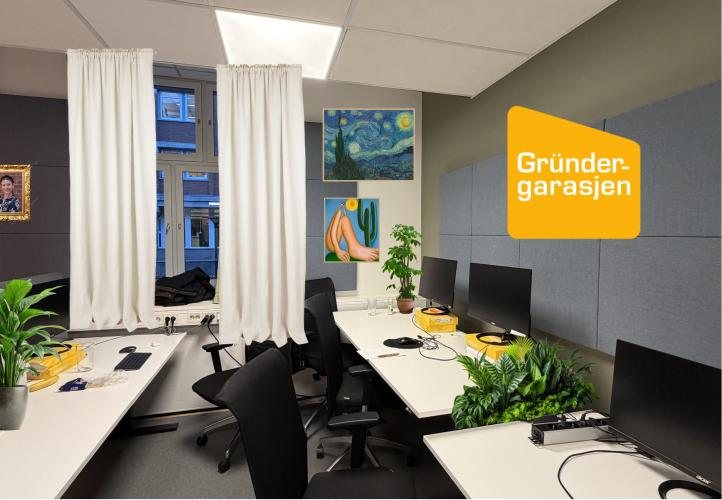
Gründergarasjen’s office space is supposed to be free-seating. In reality, the small businesses had settled into chosen rooms, potentially making it difficult for new members to understand where it was socially safe to sit.
An app is what we wanted, but guerrilla testing told us to let that idea go.
Digitizing coffee meetings
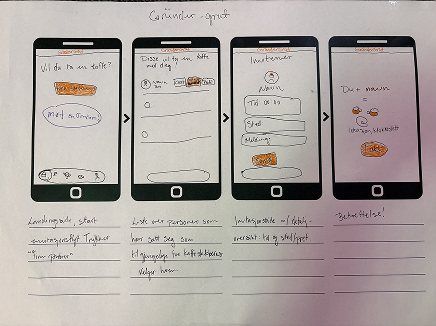
Being students of HCI, all with the shared goal of becoming UX/UI designers, we naturally wanted to design an app. After our first observations, the team brainstormed ideas for making Gründergarasjen more welcoming to new members, and that is where GründerGrut came from: an app for inviting colleagues to coffee.
Our hand-drawn prototype was taped to the wall with post-its next to it. No one left any comments. So we tried something more direct — guerrilla testing, twelve entrepreneurs at lunch — and the answer was damning. Nobody wants another app. Nobody wants to digitize lunch.
Free seating became private offices
An important aspect of Gründergarasjen’s offices was their free seating — at least according to its stakeholders. What we found was that free seating was not being practiced. Companies had settled into the rooms and made them their own: company merch on the walls, their own plants, personal belongings. The rooms looked less like shared desks than like private offices.
Gründergarasjen’s own brief had told us that members could find it hard to know where it was socially safe to sit. Standing in the rooms, we could see why.
Taking a look at the insights we had gathered, and what testing clearly told us, we found that redesigning Gründergarasjen’s physical spaces was the way to go.
Operation Fresh
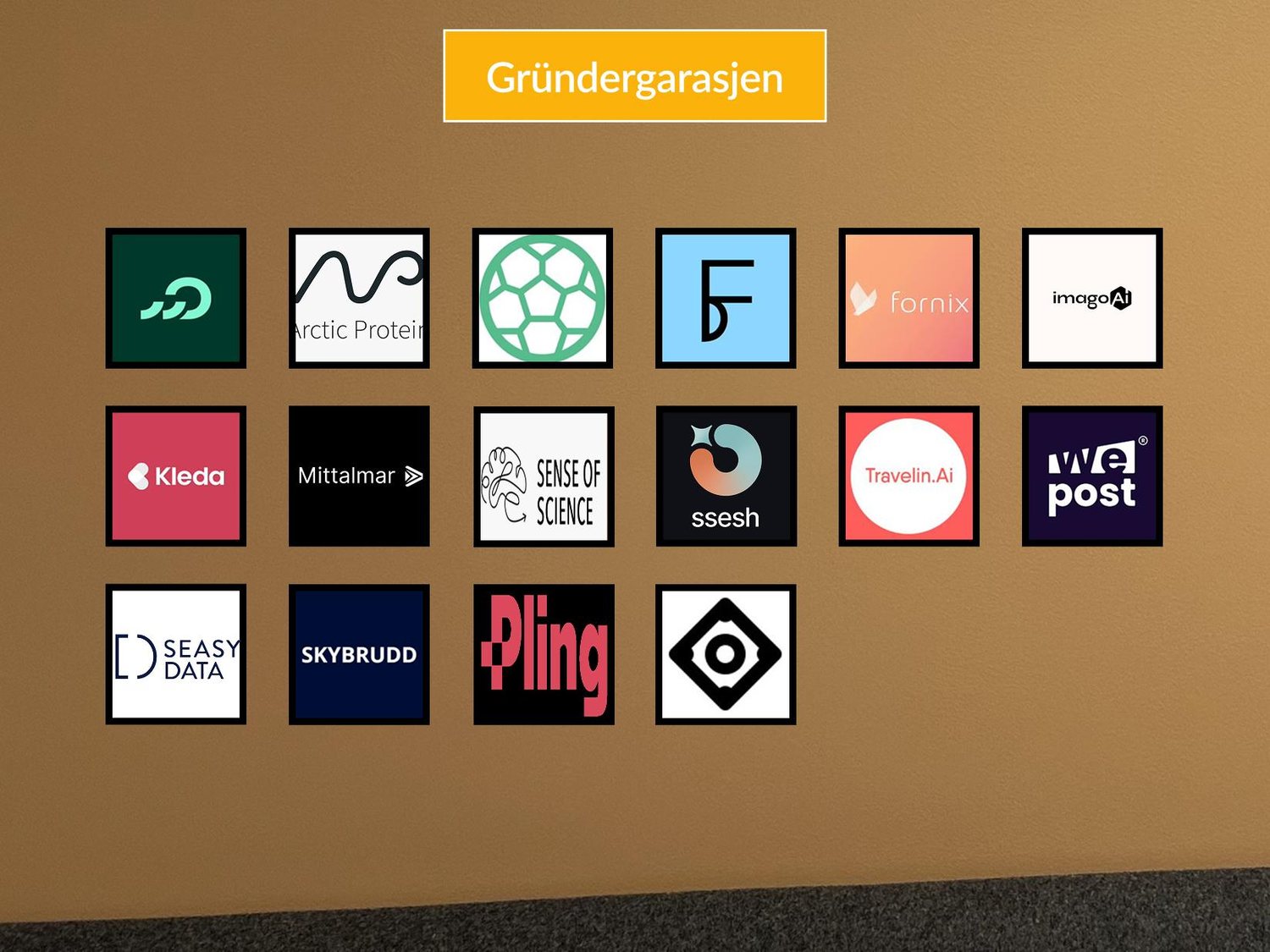
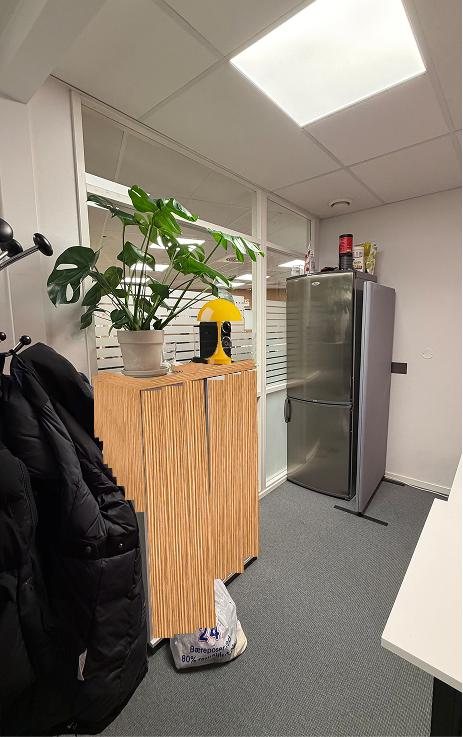
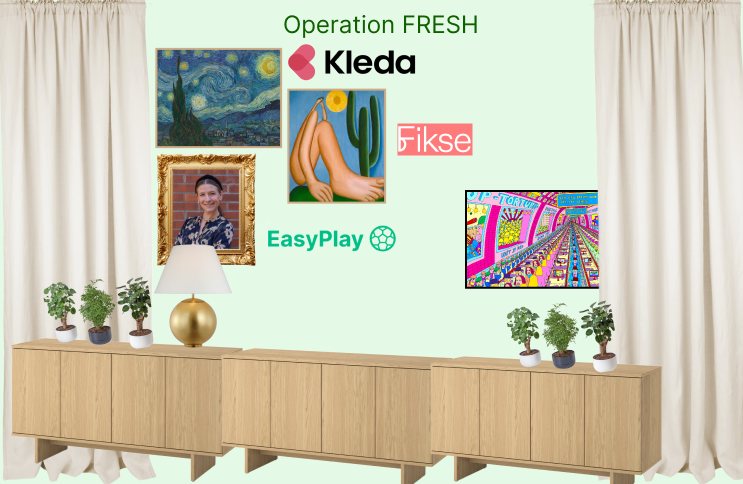
We found that newer members of Gründergarasjen felt left out — and naturally so, because GG had not updated its logo wall in years, meaning newer companies were not advertised the way the older ones were. We proposed framing every active member’s logo and hanging them in the common area by the kitchen, where people pass and where some of the work rooms can see them.
Feedback from the entrepreneurs also told us the office space was grey and uninspiring. So we suggested painting the walls, lighter curtains, and plants.
We also proposed a mix — some fixed desks for the teams who are in every day, the rest kept free — but stakeholders turned it down quickly. The office space is not large enough for all entrepreneurs, which means free seating is necessary.
What I would do differently
Through this project, the value of early user testing became apparent. If I could do it again, I would take care not to let my personal wishes and bias influence what prototypes to move ahead with.
With more time, we would have liked to try implementing Operation Fresh, and to see whether or not it actually worked.
Lastly, and related to the app, is learning the value of interdisciplinary collaboration. If the team had consisted of students from other master’s programs, both the ideation process and final outcome could have been different.
Gründergarasjen and Operation Fresh were group work. All three of us participated in all activities.